
Bud Shank’s Holiday in Brazil Finally Gets the Recognition It Deserves
Recorded in 1958, years before bossa nova became a global phenomenon, Bud Shank’s 'Holiday in Brazil' captures jazz and Brazilian music colliding in real time. This new Impex Records pressing shines a spotlight on one of the most overlooked and atmospheric jazz recordings of its era.

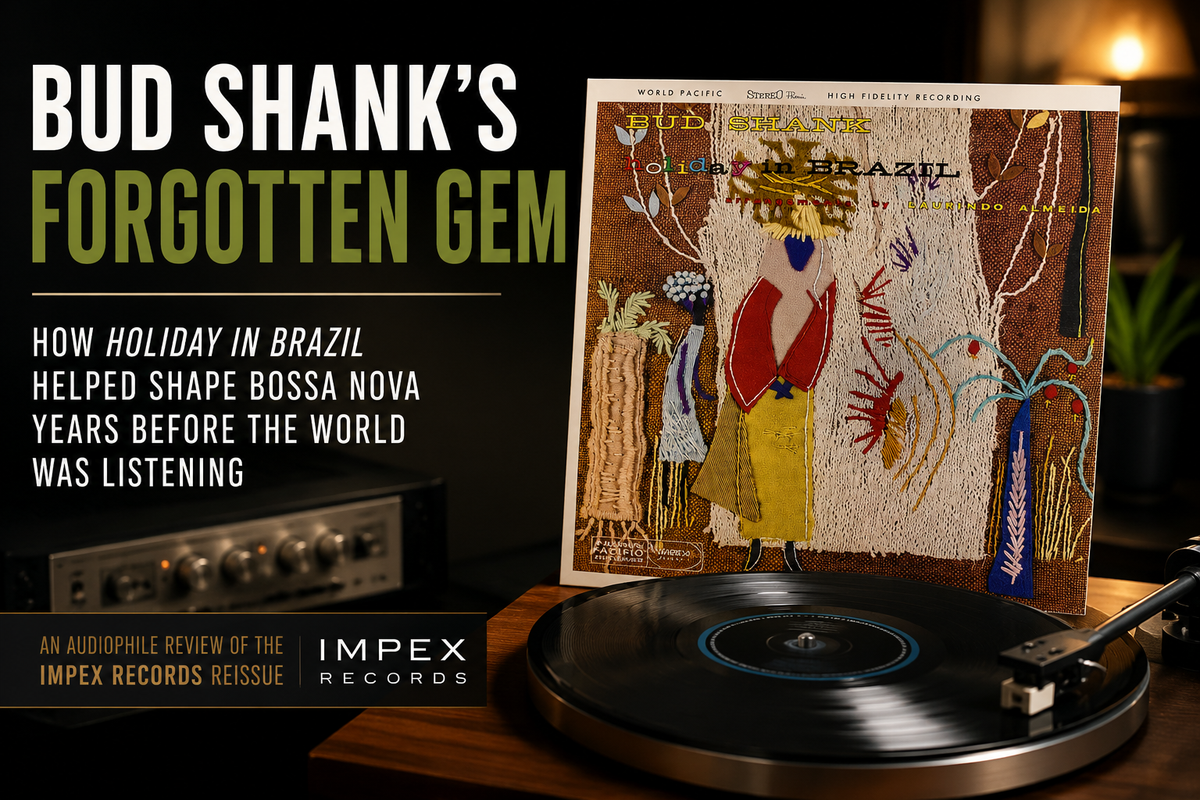
There are certain records that feel bigger than their reputation. Albums that quietly influenced entire movements, yet somehow never became part of the mainstream jazz conversation. Bud Shank’s Holiday in Brazil is one of those records.
Originally recorded in 1958, years before bossa nova exploded internationally through artists like Stan Getz and João Gilberto, Holiday in Brazil captures a fascinating musical crossroads. This wasn’t musicians chasing a commercial trend. The trend didn’t exist yet. Instead, what you hear is a group of players exploring the intersection of West Coast jazz and Brazilian music in a way that feels remarkably organic, even by today’s standards.
And now, thanks to Impex Records, this overlooked title is getting the kind of audiophile reissue treatment that allows listeners to truly appreciate what made it special in the first place.
A Record That Feels Discovered, Not Manufactured
One of the things that immediately stands out about Holiday in Brazil is how unforced everything feels. Modern listeners often associate Brazilian jazz with smooth, polished arrangements and instantly memorable rhythms. This album is something different entirely.
There’s an openness to the recording that makes it feel almost exploratory. The musicians aren’t trying to “sell” the sound to you. They’re simply playing within it.
Bud Shank moves effortlessly between alto saxophone and flute throughout the album, while Laurindo Almeida’s nylon string guitar provides much of the emotional center. Almeida deserves a tremendous amount of credit here because his playing doesn’t merely accompany the jazz elements. It helps define the atmosphere of the entire record.
The rhythm section remains understated throughout, but that restraint is exactly what gives the album its character. Nobody is overplaying. Nobody is fighting for attention. The music breathes naturally.
That sense of space becomes one of the defining traits of the album.
More Than Early Bossa Nova
Calling Holiday in Brazil a “bossa nova album” is probably too simplistic. In fact, part of what makes it interesting is how often it avoids the obvious characteristics people now associate with the genre.
Sometimes the music leans heavily toward jazz. Other moments drift toward samba and Brazilian phrasing. There are passages where the two styles almost seem to hover in balance without fully committing to either side.
That push and pull gives the album its identity.
You can hear it particularly during the flute passages, where the overall presentation softens dramatically. The arrangements become lighter, more atmospheric, and less dependent on traditional melodic structure. Instead of focusing on hooks or memorable choruses, the album prioritizes mood and interaction between the players.
It’s the kind of record that slowly reveals itself over repeated listens.
The first time through, it may simply sound pleasant and relaxed. But the more time you spend with it, the more you begin noticing the subtle rhythmic interplay, the tonal contrasts between instruments, and the conversational nature of the arrangements.
This is not background music pretending to be jazz. It’s jazz built around feel rather than spectacle.
The Impex Records Pressing
From an audiophile perspective, this new Impex pressing does an excellent job preserving the natural qualities of the original recording without attempting to modernize it.
That’s important because Holiday in Brazil works precisely because of its restraint.
This is an early stereo recording, and the instrument placement reflects that era. Players are spread distinctly across the soundstage, with clear left and right separation that immediately reminds you this was recorded in the late 1950s. But unlike some early stereo jazz recordings that can sound thin or gimmicky, this pressing maintains a surprising amount of body and warmth.
The biggest surprise for me was the bass response.
For a 1958 recording, the low end is far more articulate and grounded than expected. It gives the album a stronger sense of foundation and prevents the softer arrangements from drifting into overly delicate territory. There’s enough weight underneath the music to keep everything anchored.
Tonally, Impex made smart choices here.
There’s no exaggerated top end trying to manufacture artificial detail. No hyped treble designed to impress listeners during the first thirty seconds. Instead, the presentation sounds balanced, smooth, and believable.
That natural tonality allows the texture of the instruments to come through beautifully. The flute sounds airy without becoming brittle. Almeida’s guitar retains warmth and body. Bud Shank’s alto has presence without glare.
Most importantly, the record remains engaging over an entire side.
That might sound like a small thing, but many modern reissues prioritize immediacy over long term listenability. Holiday in Brazil succeeds because it invites you deeper into the music rather than constantly demanding your attention.
A Different Kind of Jazz Experience
This probably isn’t the record you pull out when you want explosive dynamics or dramatic sonic fireworks. If your primary focus is ultra modern audiophile spectacle, there are certainly bigger sounding jazz records available.
But that’s also why Holiday in Brazil feels refreshing.
It rewards patience.
It rewards attentive listening.
And perhaps most importantly, it reminds you that some of the most influential music in jazz history wasn’t necessarily loud, flashy, or commercially dominant. Sometimes the records that matter most are the ones quietly pushing boundaries before the rest of the world catches up.
That’s exactly what this album feels like.
Why Releases Like This Matter
One of the reasons I continue appreciating what Impex Records is doing is their willingness to go beyond the obvious audiophile staples.
Anyone can reissue universally recognized classics. But albums like Holiday in Brazil help broaden the conversation around jazz history and remind listeners how many incredible recordings still remain underappreciated.
This is the kind of release that can easily become a favorite discovery for the right listener.
Especially if you enjoy:
- Early stereo jazz recordings
- Intimate and atmospheric presentations
- Brazilian influenced jazz
- Records that prioritize realism over spectacle
- Lesser known jazz gems outside the usual audiophile canon
For those listeners, this pressing absolutely deserves attention.
Watch the full video review here:
Bud Shank’s Holiday in Brazil releases March 20, 2026. Order the album.